The Snag List Is Not the Whole House: Surveying a 2026 New-Build Before the Warranty Clock Starts

Photo: Diliff, CC BY-SA 3.0, via Wikimedia Commons
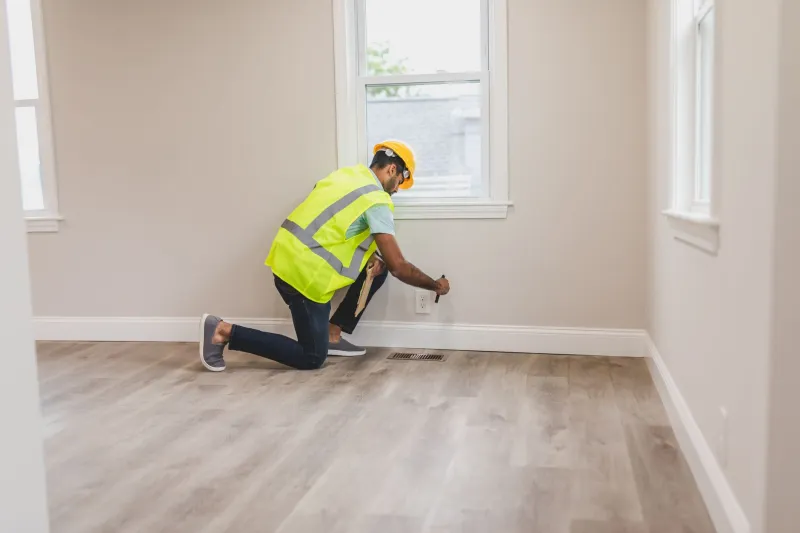
Buying a new-build home in the UK has become a process of lists. There is the options list, the completion date list, the meter reading list and, above all, the snagging list. Snagging has become shorthand for new-build quality, and a thorough snagging inspection is undoubtedly useful. But it is not the same as a survey. Snagging tends to concentrate on what can be seen and touched: paint marks, ill-fitting doors, uneven tiling, scratches and gaps. A survey looks at how the building performs — whether it is weathertight, whether water drains away, whether ventilation is adequate and whether the structure and services are sound.
In 2026, that distinction matters more than ever. New homes are built to tighter energy standards, rely more heavily on mechanical ventilation and heat pumps, and are subject to a building safety regime that places greater emphasis on evidence and accountability. The warranty clock begins at completion, not at the point when the buyer first notices a problem. An independent survey before exchange, or at the pre-completion stage where the home is already built, gives the buyer a separate pair of eyes before that clock starts running in earnest.
What snagging misses
A snagging inspection is valuable for finish and function at the margins. It will note a sticking window, a misaligned kitchen door or a poorly sealed skirting. It will not usually test the drainage run, inspect the roof covering from height, assess the ventilation strategy or check whether the external ground levels are encouraging water towards the building. Those are surveyor concerns.
A house can pass a snagging inspection and still have a soil pipe that is not properly connected, a gully that is blocked with mortar, a cavity tray that is missing above an opening, or an extract fan that is ducted into a void rather than to the outside. None of those may be obvious on a walkaround with a clipboard. All of them can become warranty claims or, worse, maintenance problems after the builder's two-year defect period has ended.
What a surveyor checks in a recently completed home
The scope of a new-build survey should be proportionate to the property and its stage of completion, but the core checks are consistent. The surveyor will look at the roof and rainwater goods, including flashings, valleys, gutters, downpipes and overflows. Where access allows, the roof space and roof structure will be inspected for evidence of leaks, poor insulation or ventilation problems.
Externally, the surveyor will consider cavity trays, weep holes, lintels, sealants around openings, thresholds and air bricks. Attention will be paid to ground levels and paving falls, because a new driveway that slopes towards the house is a common cause of dampness and complaints. Drainage is a particular focus: inspection chambers, gullies, surface water and foul connections, and any evidence of ponding or poor falls.
Inside, the surveyor will assess damp-proofing, sub-floor ventilation, extract fans, trickle vents and any mechanical ventilation with heat recovery system. Airtight new homes need effective ventilation, and a poorly commissioned system can leave occupants with condensation and stale air. Heating and hot water — whether a heat pump, boiler or cylinder — will be checked for basic function, controls and commissioning evidence. Electrics, smoke and heat alarms, and fire safety provisions are also relevant, particularly in flats and houses in multiple occupation.
Structural observations are usually straightforward in a new build, but they still matter: floor levels, lintels, roof structure, any signs of movement and the adequacy of supports. In flats, the surveyor will also consider the common parts and the information available about the building as a whole.
The warranty clock and what it covers
Most new homes in the UK come with a structural warranty, commonly NHBC Buildmark or an equivalent policy from another provider. The typical structure is a ten-year warranty: the first two years are usually the builder's responsibility for defects, followed by a further eight years of insurance-backed cover for major structural problems and water ingress. The exact terms vary, and buyers should read the policy rather than assume that every defect is covered.
The warranty clock generally starts at legal completion, or at the start of the lease for a flat. That makes the period immediately after completion important. Defects should be reported in writing, with photographs and dates, and the builder's response should be recorded. A warranty is not a maintenance policy: it will not usually cover general wear and tear, cosmetic issues or items that have not been maintained. Nor does it replace the need for a survey.
Building safety rules add another layer. The Building Safety Act 2022 introduced a more stringent regime for higher-risk buildings, generally those at least 18 metres high or with at least seven storeys. For buyers of flats in such buildings, the availability of building safety information, a golden thread of documents and a clear safety case matters. In 2026, the building control regime is more closely regulated, and buyers should expect to see completion certificates and relevant safety information. A surveyor can help identify what information should be requested, even if the legal checks sit with the conveyancer.
Why before exchange still matters
For a completed new-build or a stock plot, a survey before exchange gives the buyer time to ask questions while the builder still has a commercial incentive to resolve them. For an off-plan purchase, the home may not yet exist at exchange, so the practical opportunity comes later: a pre-completion inspection and a survey at handover, before the final payment is released and before the warranty clock starts.
Either way, the principle is the same. An independent survey is not a criticism of the builder; it is a check on performance. It can identify drainage defects, ventilation problems, missing cavity trays or weatherproofing issues that a snagging list would not capture. It can also provide evidence if a warranty claim becomes necessary. The cost is modest relative to the purchase price, and the information is most useful before the buyer is committed to a completion date.
A proportionate approach
A new-build survey should not be read as though the property were a Victorian terrace. New homes have different tolerances, different materials and different maintenance requirements. The purpose is to establish whether the home is performing as it should, not to generate an open-ended list of dislikes. A good survey will separate defects from preferences, safety issues from cosmetic ones, and items for the builder from items for the homeowner.
Buyers should combine the survey with a professional snagging inspection, keep a dated record of correspondence, and ask for commissioning certificates for heating, ventilation and electrical systems. If the property is a flat, the lease, service charge and building safety information deserve the same attention as the interior finish.
The warranty clock is a deadline, not a comfort blanket. A home that looks finished on completion day may still have hidden performance issues. An independent survey before exchange or handover is a sensible way to find them while there is still time to act.